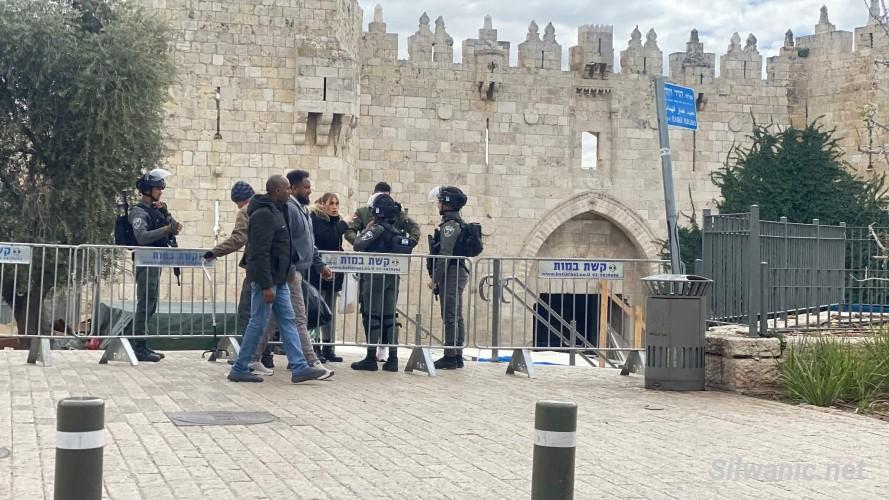
Arrests, deportations, and travel bans under the state of emergency
Israeli actions against Jerusalem residents persisted despite the declaration of a state of emergency, including restrictions on visiting Al-Aqsa Mosque, travel bans, and summonses for questioning.
Israeli intelligence apprehended Khadija Khweis, a woman from Jerusalem, near Damascus Gate in Jerusalem. She was pursued as she headed to the Al-Maskobyeh police station for questioning. Khweis was then taken to the Al-Qishla police station in the Old City, where she was issued a one-week ban from Al-Aqsa Mosque, renewable, even though she had another summons for the following Sunday at the Al-Qishla station. Notably, she had not finished her prior ban.
After her release from the Al-Qishla police station, Khweis went to the Al-Maskobyeh police station, where she was served with a travel ban order signed by Israeli Prime Minister Benjamin Netanyahu.
Similarly, Hanadi Halawani, a Jerusalemite woman, received an order banning her from traveling during the month of August, after being summoned for interrogation at the Al-Maskobyeh police station in Jerusalem.
In recent days, arrests persisted, with the Information Center reporting the detention of two young men, Yazan Jaber and Munther Shaheen, from Issawiya village, along with the arrest of Hussam Seder, an Islamic Endowment Department employee.
The intelligence services also summoned Imad Abeesan Al-Abbasi and issued a one-week ban from Al-Aqsa Mosque, with the potential for renewal, despite his previous ban not having expired. Additionally, they banned Mohammad Al-Taweel from Al-Aqsa Mosque for six months.