Administrative detentions, expulsions from Al-Aqsa Mosque, and restrictions on movement
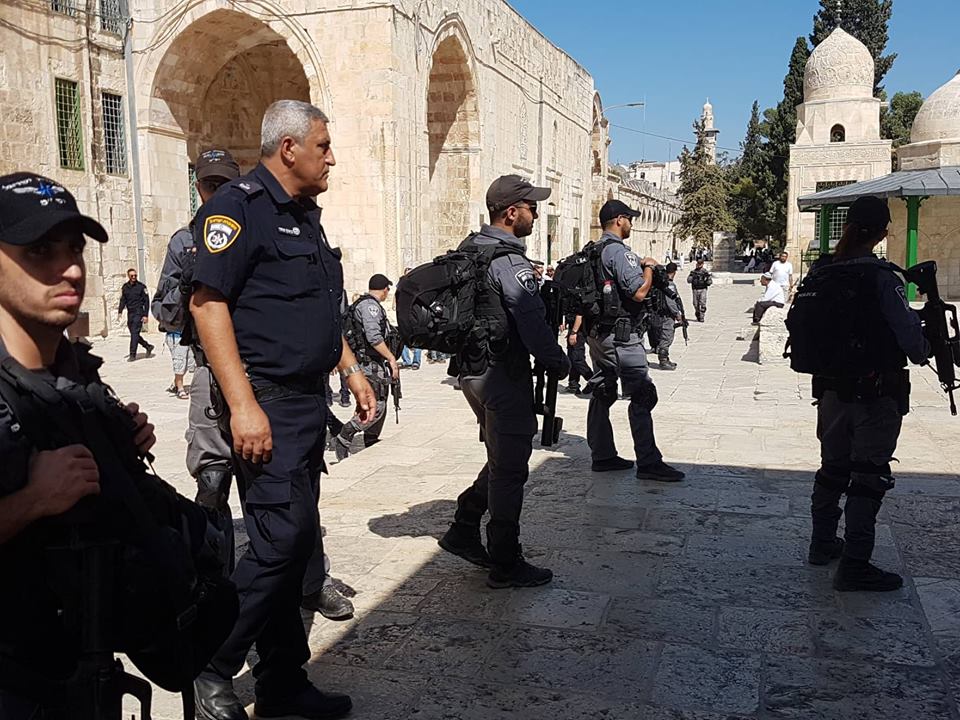
The Israeli occupation authorities persisted in targeting released prisoners in Jerusalem through administrative detention and bans from Al-Aqsa Mosque, along with imposing new restrictions on movement. Israeli forces also kept raiding towns and neighborhoods across Jerusalem.
The Wadi Hilweh Information Center in Jerusalem reported that occupation authorities transferred released prisoner Izz Attoun to administrative detention after arresting him on Thursday as he was heading to work. His detention was first extended to Friday, then to Sunday. While his family expected to attend his court hearing today, their lawyer informed them that Attoun had been placed under administrative detention.
Attoun previously served over two years in Israeli prisons.
The occupation authorities also continue issuing deportation orders and investigating other released prisoners. Over 20 young Jerusalem residents have been subjected to deportation orders from Al-Aqsa Mosque, including:
1. Saed Al-A’war: Banned from Al-Aqsa Mosque for 6 months.
2. Released prisoner Mohammed Zalloum: Banned from Al-Aqsa Mosque for 6 months.
3. Barakat Al-Za’tari: Banned from Al-Aqsa Mosque for 6 months.
4. Mohammed Al-Za’tari: Banned from Al-Aqsa Mosque for 6 months.
5. Ramzi Al-Abbasi: Summoned for questioning upon his return from travel, released on condition of a one-week ban, renewable.
6. Mohammed Jabr Al-Abbasi: Summoned for questioning and released on condition of a one-week ban, renewable.
7. Qassam Attoun: Summoned for questioning and released on condition of a two-week ban, renewable.
8. Mohammed Attoun: Summoned for questioning and released on condition of a two-week ban, renewable.
9. Nidal Abu Hussein: Summoned for questioning and released on condition of a one-week ban, renewable.
10. Ahmed Murrar: Summoned for questioning and released on condition of a one-week ban, renewable.
The Information Center explained that some of the young men who received deportation orders preferred not to disclose their names.
The summonses for young men and women to various detention centers in Jerusalem persisted, along with orders preventing them from entering Al-Aqsa Mosque.
Recently, occupation authorities restricted Ahmed Shwayat, a former prisoner, from traveling to Eilat (Umm al-Rashrash) to celebrate his honeymoon. According to the Information Center, the forces intercepted the bus Shwayat was on with his wife at the city's entrance checkpoint. They called out his name in front of other passengers, informed him of a security-related ban on his entry, and made him disembark. Notably, Shwayat was released last September after serving a 21-month sentence.
The occupation authorities also handed Jerusalemite activist Hanadi Halawani a "travel ban" order, signed by Israeli Prime Minister Benjamin Netanyahu, that will take effect next March.
Yesterday, occupation forces detained Bilal al-Ajlouni, an employee of the Islamic Endowment Department, and his detention was extended to next Thursday. Firas al-Jabrini, lawyer for the Wadi Hilweh Information Center in Jerusalem, submitted an appeal to the District Court against this extension. The court accepted the appeal and postponed his detention until next Tuesday.
Meanwhile, Israeli occupation forces stormed neighborhoods in Silwan, targeting shops with the involvement of the occupation municipality, property tax authority, and the Ministries of Health, Economy, and National Insurance, all under the protection of special forces and police. They set up checkpoints on the streets and at the entrances, issued fines to business owners, handed out summonses to various departments, and issued traffic tickets to vehicles.