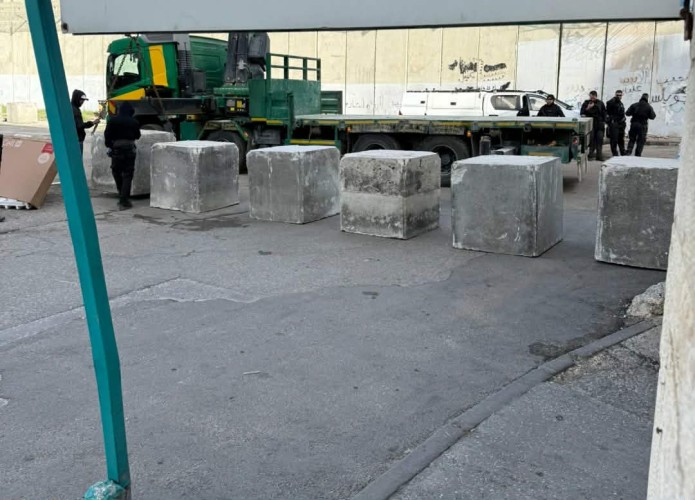
Sudden closures in Al-Dahiyeh: The occupation is isolating the area with concrete blocks
On Tuesday morning, Israeli occupation forces installed concrete blocks at key intersections in the al-Dahiyeh neighborhood of Jerusalem, accompanied by a substantial troop presence in the area.
Residents said they were surprised by occupation forces entering the area, who arrived with a truck carrying concrete blocks. The blocks were unloaded at various spots, causing main streets and intersections to close as the forces took positions there.
This measure significantly disrupted the movement of Jerusalem residents, affecting thousands of locals, business owners, visitors to various institutions and schools, and students, by making travel to work, school, and hospitals more difficult.
Several residents reported that these closures have made their daily lives difficult, as the elderly, ill, women, and children must walk long distances to reach their homes or jobs, with no alternative routes or suitable detours provided.
Home and shop owners reported that Israeli forces stormed the area yesterday, instructing them to move their vehicles from multiple locations and park far from their homes and businesses without any explanation. Today, they discovered concrete blocks placed in the area, which will significantly hinder residents' movement by preventing easy vehicle travel, forcing them to carry their belongings and walk long distances.
Residents noted that these measures not only disrupted the movement of citizens but also blocked access to essential services. Today, garbage collection and gas supply vehicles could not reach the area, raising concerns about waste buildup and shortages of basic supplies.
They further stated that these measures will negatively impact their livelihoods, as shop owners will face difficulties attracting customers and receiving merchandise, threatening a decline in commercial activity.
Besides residential homes, the area features institutions, centers, businesses, banks, and schools. These elements act as substantial barriers to movement and transportation, which in turn hampers the educational process and service delivery.
Residents highlighted that this measure is part of a continuous policy of repression against Jerusalemites, intended to limit their mobility and interfere with their everyday routines.
The residents and merchants called on the relevant authorities and human rights organizations to intervene urgently to halt these measures.