Al-Aqsa Mosque is closed…but expulsion orders continue
For the eighteenth consecutive day, Al-Aqsa Mosque remains completely closed under the state of emergency imposed by Israeli authorities following the outbreak of the Israeli-American war on Iran. Despite the absence of worshippers and the mosque being emptied of visitors, expulsion orders from it have not stopped, creating a striking paradox: Al-Aqsa is closed... but the expulsions continue.
Although access to the mosque is restricted to a few Islamic Endowment Department employees, intelligence services still summon young Palestinian men and women for hearings to prepare expulsion orders from Al-Aqsa. These orders may last up to a week and can be renewed for several months. Additionally, the Jerusalem police chief remains responsible for signing expulsion orders that can extend up to six months in certain instances.
The measures extend beyond summonses to include arrests followed by expulsion orders. These actions have impacted Palestinians from Jerusalem and the Palestinian territories within Israel, including those who tried to get as close as possible to pray near Al-Aqsa Mosque during its ongoing closure in Ramadan.
Additionally, on Tuesday, authorities intensified their issuance of expulsion orders from Al-Aqsa Mosque, expelling Khadija Khweis and former prisoners Imad Al-Abbasi, Musa Fatafta, and Dujana Attoun for six months.
Attoun was summoned at the start of this year and initially received a one-week ban, with a request for a future review to decide on renewing the ban. Over recent weeks, he was repeatedly called in and verbally told that his ban from entering Al-Aqsa Mosque was extended, but no official order was issued. This meant he was kept banned through weekly verbal extensions until today's official order, which bans him until September. Consequently, Attoun has been effectively barred from Al-Aqsa Mosque for nearly nine straight months.
Yesterday, authorities also banned Al-Aqsa Mosque guard Ahmed Al-Awar for one week, with the option to extend the ban.
Since the start of the conflict, the Wadi Hilweh Information Center in Jerusalem has recorded over 25 bans on individuals from Jerusalem, the Palestinian territories, or the Old City, including young men, women, and Al-Aqsa Mosque guards. These bans have also extended to religious leaders, such as Sheikh Ekrima Sabri, who was barred from the Old City citing his "statements regarding the closure of Al-Aqsa."
Pursued even outside the mosque
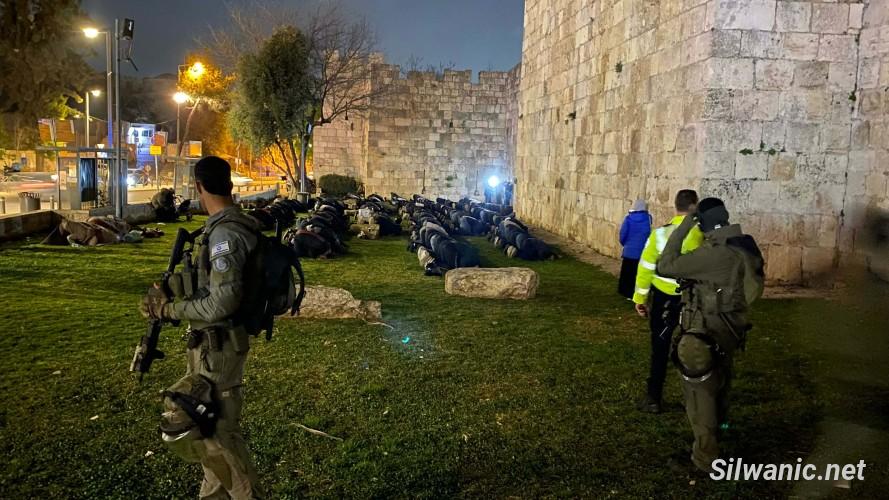
Despite the complete closure, young men have continued to gather for several days to perform the Isha and Taraweeh prayers, as well as the Fajr prayer, at the closest possible point near Al-Aqsa. However, they face frequent pursuits, attacks, and arrests, as forces try to disperse them and prevent their presence.
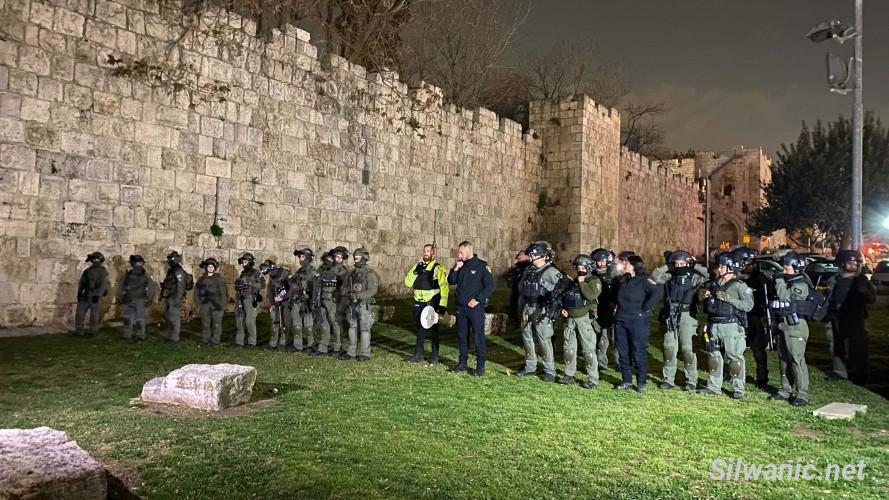
Israeli forces have constructed iron barriers around open spaces near the Old City walls, strengthening their control to prevent gatherings or prayers. Daily arrests occur, with detainees released conditionally, often on the condition they are barred from the area.
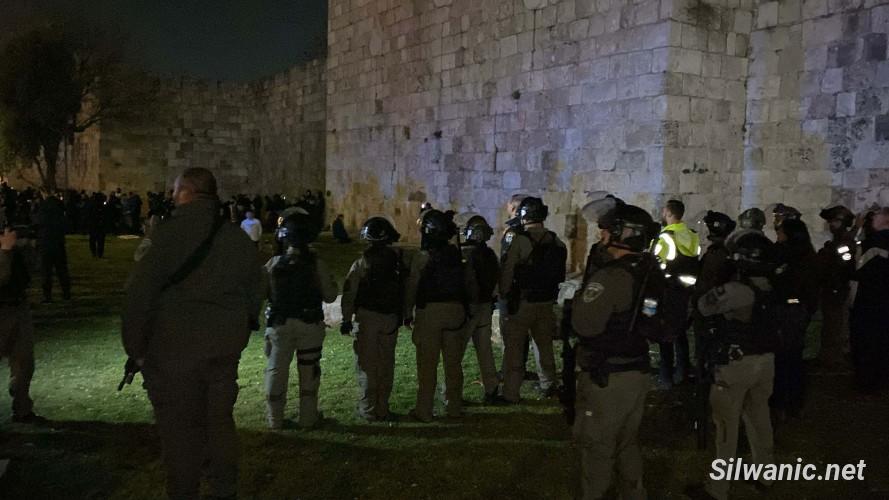
On Tuesday, Israeli forces stopped young men from gathering and praying in Herods Gate area, forcibly pushing them towards Wadi al-Joz. Several individuals were assaulted, and some were detained at the scene.
Israeli forces keep a strong presence at all gates of the Old City, allowing entry only for residents. As a result, young men often pray at the closest possible spots, frequently facing harassment and attacks.
The Wadi Hilweh Information Center in Jerusalem noted that more than 550 deportation orders have been issued since the start of this year, marking an unprecedented increase in this policy. This practice persists even during the full closure of Al-Aqsa Mosque, as if a state of emergency is in effect for everything... except for deportations.
Meanwhile, during the war and the state of emergency, the Israeli authorities imposed travel bans. Also, two young men were transferred to administrative detention during this period, and raids and arrests persist in Jerusalem.