Closing the city and violating the Al-Aqsa Mosque: Jerusalem during the Jewish holiday of Yom Kippur
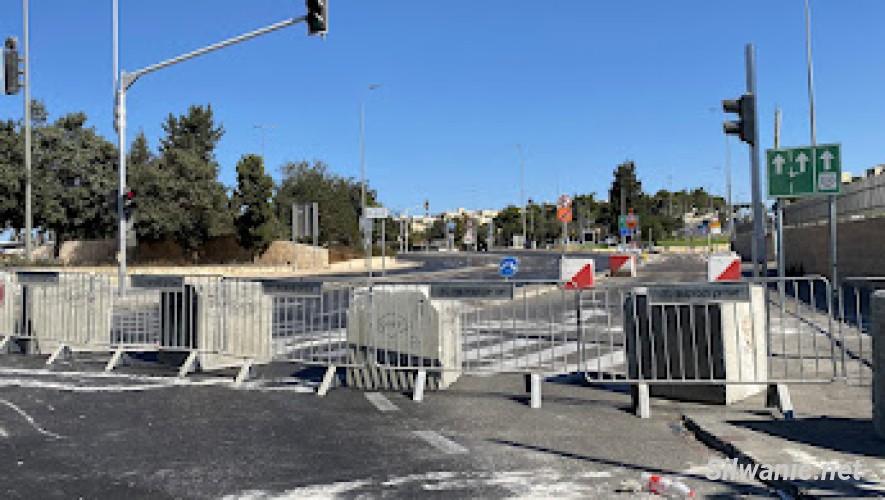
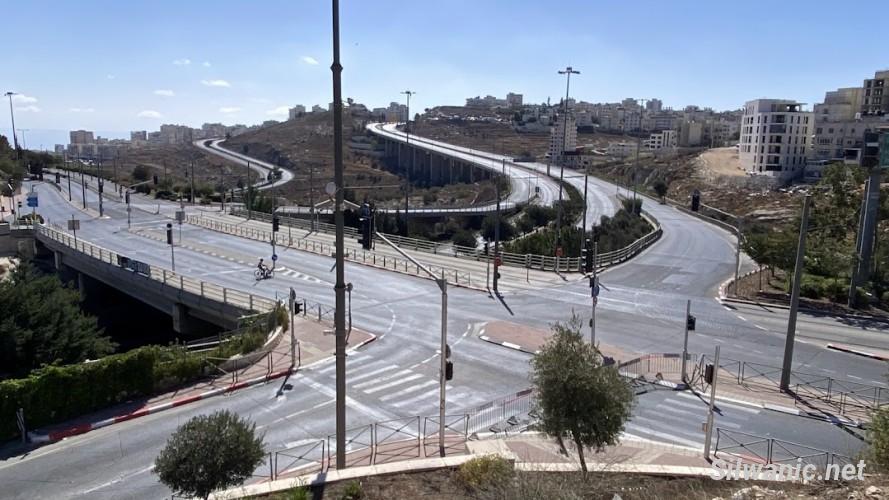
On the Jewish holiday of Yom Kippur, Jerusalem took on a different appearance: empty streets, isolated Jerusalem neighborhoods and towns, and a heavy deployment of forces at checkpoints and area entrances. This was part of a sweeping lockdown accompanying the holiday, effectively turning large parts of the city into zones largely closed off to Palestinian movement.
While strict movement restrictions paralyzed daily life in many Jerusalem neighborhoods and towns, the Al-Aqsa Mosque experienced widespread violations. Incursions, Jewish rituals, and prayers occurred in its courtyards—coinciding with occupation measures that restricted Palestinian access, barred many from reaching the mosque, and limited entry to specific age groups (mostly the elderly).
Al-Aqsa: Mass incursions and public prayers
A total of 686 settlers stormed the Al-Aqsa Mosque today—418 during the morning sessions and 268 in the afternoon. These incursions occurred between 6:30 and 11:30 a.m. and again from 1:30 to 3:00 p.m., totaling six and a half hours of incursions throughout the day.
Settlers performed Yom Kippur-specific prayers alongside daily prayers inside the mosque. The eastern area of the mosque became a gathering point for settlers who prayed collectively, formed circles for singing and dancing, and performed group prostrations, all while Muslim worshippers and mosque guards were prevented from reaching the site or approaching the groups of intruders.
The Wadi Hilweh Information Center reported that the total number of settlers who stormed the Al-Aqsa Mosque over the past two days—coinciding with the Jewish holiday of Yom Kippur—reached 1,649.
The center reported a notable rise in intruders during this holiday compared to last year. It emphasized that the seriousness of the situation stems not only from the increasing numbers but also from the nature of the religious rituals and celebrations accompanying these intrusions. These practices, visible across different areas of the mosque courtyards, were conducted openly and included religious texts and specific attire.
At the gates of Al-Aqsa Mosque, police deployed personnel and set up metal barriers. Worshippers were told to return only after midday incursions had ended. Meanwhile, security forces assigned specific seating areas for those who reached Al-Aqsa and limited their movement within the courtyards.
Occupation measures expanded around Al-Aqsa Mosque, the Old City, and the connecting roads, amid a large troop presence and closure of many streets and access points. Jerusalem was essentially turned into a city divided by checkpoints and mobile barriers, isolating neighborhoods and towns from their surroundings, while settlers were allowed to access the Old City and the Al-Buraq Wall to carry out their religious rituals.
Isolation of neighborhoods and towns
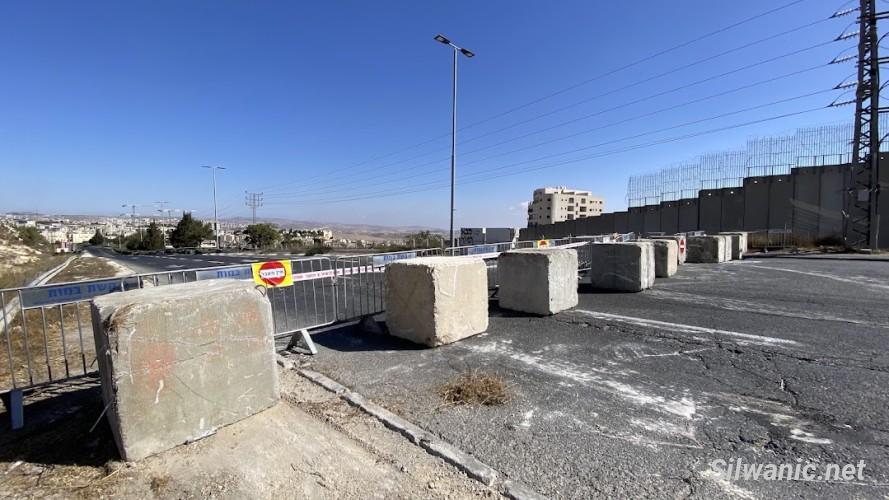
Over about 27 hours—from yesterday evening to this evening—extensive closures were carried out, blocking streets, major intersections, and entrances to many towns and neighborhoods in Jerusalem, especially those near Israeli settlements and areas.
Security forces obstructed several roads with metal barriers, concrete blocks, and police vehicles. Checkpoints and tape cordons were established on various streets, causing a complete closure of both vehicle and pedestrian traffic in certain areas. This effectively transformed many towns and neighborhoods into expansive prisons, severely restricting movement and access to surrounding areas.
As a result, Yom Kippur turned into a mandatory day of rest for Jerusalem residents; most schools closed, institutions suspended activities, and shops shut due to road closures, increased security, and movement restrictions throughout much of the city.
The closure measures not only restricted movement but also involved attacks on Jerusalemites by settlers and forces.
Yesterday, settlers attacked vehicles belonging to Jerusalem residents in Umm Tuba, during area closures and police deployments.
In Sur Baher, security forces used tear gas canisters, causing fires near shops and homes.
Yesterday afternoon, settlers attacked young Jerusalemites walking in Silwan, firing live rounds into the air.
Reflecting Jerusalem's reality during Yom Kippur, roads were shut, and Palestinian neighborhoods and towns were sealed. Meanwhile, routes remained open for settlers to access the Old City, Al-Aqsa Mosque, and Al-Buraq Wall for their religious practices, including prayers and collective rituals inside Al-Aqsa.
Although the lockdown turned Jerusalem into a nearly empty city, the Al-Aqsa Mosque stayed open to settler visits and religious rituals. This demonstrates measures that extend beyond simple movement limits, gradually changing the mosque’s sense of time and space, while also increasingly allowing and broadening Jewish religious activities within its grounds.