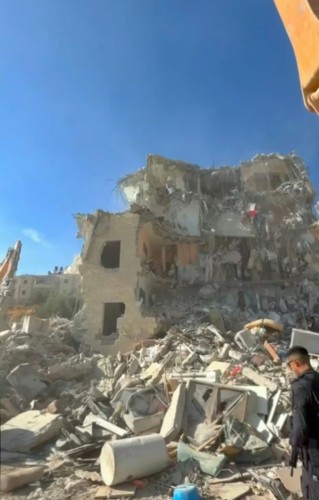
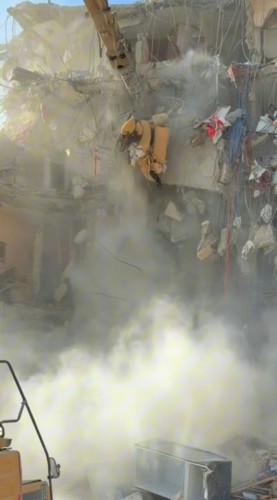
Details: Al-Tur building demolished and 75 Jerusalemites displaced at dawn—Ben-Gvir on the bulldozer amid escalating targeting of residential buildings in Jerusalem
Residents of the building in Al-Tur never expected dawn to bring their final departure from home.
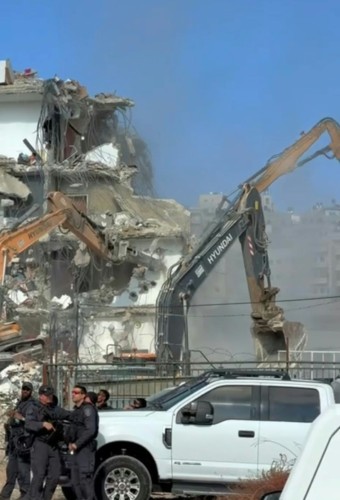
At 3:30 a.m., large contingents of police, special forces, and Border Police, accompanied by occupation municipality crews and heavy machinery, stormed the area around the residential building. They sealed off the entire zone, then raided the apartments one by one while the families slept.
Men, women, and children awoke to the sounds of soldiers shouting. Families had no time to evacuate their homes or gather their belongings. Residents were forced out immediately as soldiers spread through the apartments, searching rooms and belongings and preventing families from returning to retrieve their possessions.
Between 7 and 15 soldiers stormed each apartment, forcing young men and boys to sit or lie face down on the floor during the searches. Residents were generally not allowed to use the bathroom freely, though some were granted conditional access—for example, on the condition that they leave the door open.
Families described harsh treatment involving shouting, shoving, and forced, hurried evacuations. When residents asked to remove their belongings, they were told, "Take whatever you can in one go," and were not allowed to return later to empty the apartment.
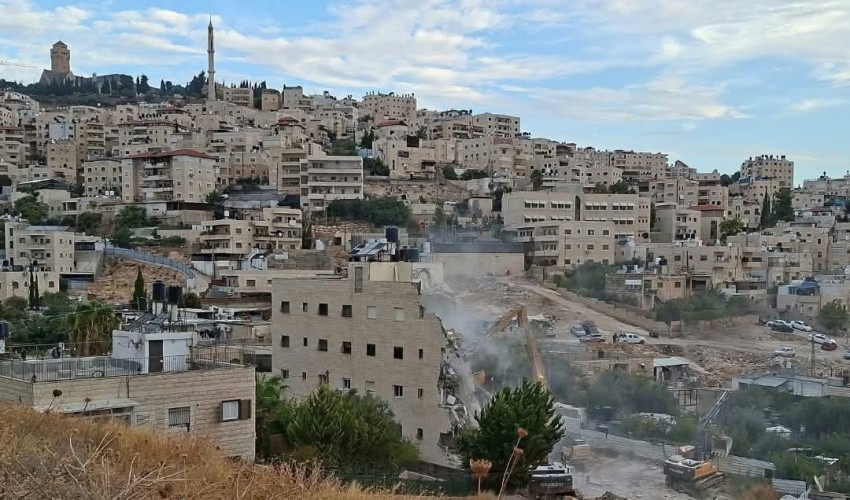
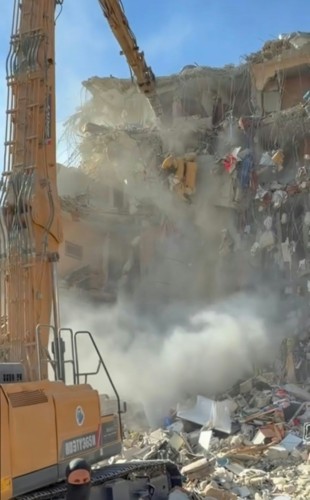
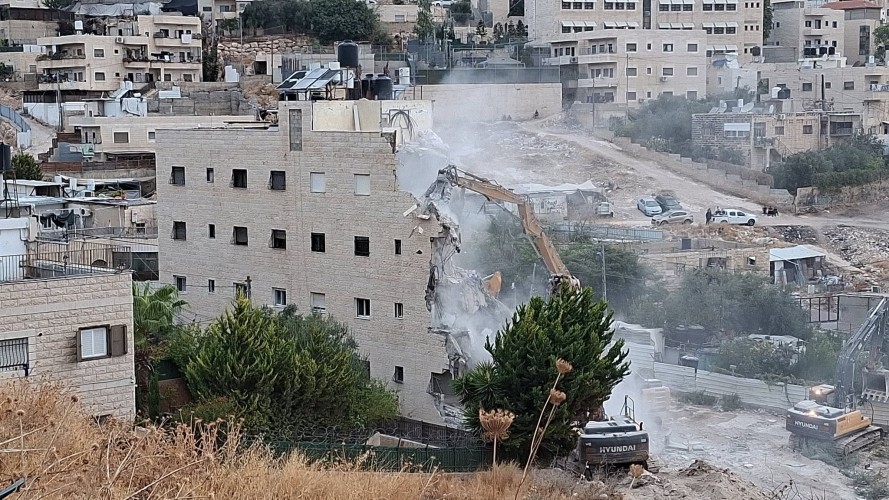
As the families struggled to understand what was happening, bulldozers began tearing down the building where they had lived for years. The five-story apartment building held a whole life on every floor: bedrooms where children slept, kitchens where families prepared meals, photographs, cherished memories, and belongings they had gathered over the years.
Residents fled in haste. Some managed to grab only what they could snatch from their homes in those few minutes, leaving much behind. There was no time to sort through their possessions or even properly bid farewell to the place. They had once entered these homes filled with life, furnishings, and memories, but now left them under the duress of soldiers' orders and the approach of bulldozers.
The building housed the Khalfawi, Abu Sbitan, Ashour, Joudeh, Abu Halawa, Al-Ghosh, Bader, Qirresh, Al-Hirbawi, Al-Sayyad, and Sandouka families—about 75 people in total, including 35 children. Some families occupied more than one apartment.
As demolition continued, it was not simply a matter of tearing down walls and ceilings; it meant dismantling the homes where these families had lived for years—homes they had fought to keep as they worked to secure a building permit.
According to the families, the building had been standing since 2009. For years, they had navigated the legal process to secure a building permit and managed to fend off earlier demolition orders. But a final Supreme Court ruling, issued about a month ago, ended those efforts. It cited the absence of a building permit and plans to build a school on the site, replacing the municipality's earlier stated reason for demolition: making way for a road. The day before the demolition, the families asked for more time to vacate the apartments and remove their belongings. Instead, at dawn, municipal forces caught them by surprise with a massive raid, immediately beginning the eviction and demolition without allowing them the requested time.
As the walls crumbled, families stayed nearby, helplessly watching their homes slowly turn to rubble. Children lost their bedrooms, while men and women were shut out, unable to gather all their belongings.
Behind every apartment in the building was a family’s story, and behind every stone were years of life and memories. In just a few hours, bulldozers crushed that life, leaving approximately 75 Jerusalemites—including 35 children—homeless and facing an uncertain future. For residents, it was more than a bulldozer tearing down walls: they watched the place they had lived for years collapse, while their belongings and memories remained trapped inside, beyond their reach.
Ben-Gvir boasts about the demolition of a residential building in the town of Al-Tur and personally boards an occupation bulldozer
In a striking scene, Israeli National Security Minister Itamar Ben-Gvir arrived in Al-Tur under heavy security to oversee the demolition firsthand. He did more than observe: he climbed onto one of the bulldozers involved and watched as the building was brought down floor by floor.
As families stood outside their evicted homes, unable to collect their belongings, Ben-Gvir arrived while the machinery was already working and watched the demolition firsthand.
Speaking from inside the bulldozer, he said: "I arrived this morning with the bulldozers of enforcement in the Al-Tur neighborhood of East Jerusalem to personally verify that the policy I pursue was being implemented. An illegally constructed multi-story building has been demolished, and the land has reverted to the State of Israel. 'Sovereignty is ours'—that is the sound I love hearing most of all"—referring to the noise of the bulldozers and the demolition—as he boasted about the intensified demolition operations during his tenure.
Escalation in the demolition of residential buildings in Jerusalem
Data from the Wadi Hilweh Information Center – Jerusalem points to a marked rise in the targeting of residential buildings in Jerusalem in recent years. This reflects a clear shift from demolishing individual homes to demolishing entire residential buildings, expanding displacement to dozens of families in a single operation.
In 2026, occupation authorities have demolished six residential buildings, including the Al-Tur building demolished today, comprising approximately 30 apartments.
In 2025, the Center recorded the demolition of three residential buildings with 22 apartments. In 2024, it recorded the demolition of five residential buildings with 12 apartments, including two buildings that were under construction.
The targeting of residential buildings, alongside the ongoing demolition of individual homes and structures, reflects the expanding scope of the city’s demolition policy. The policy is no longer limited to a single home or family; it now reaches entire buildings, displacing more families and children in a single operation.