Jerusalem on the fifth day of “Al-Aqsa Flood” operation
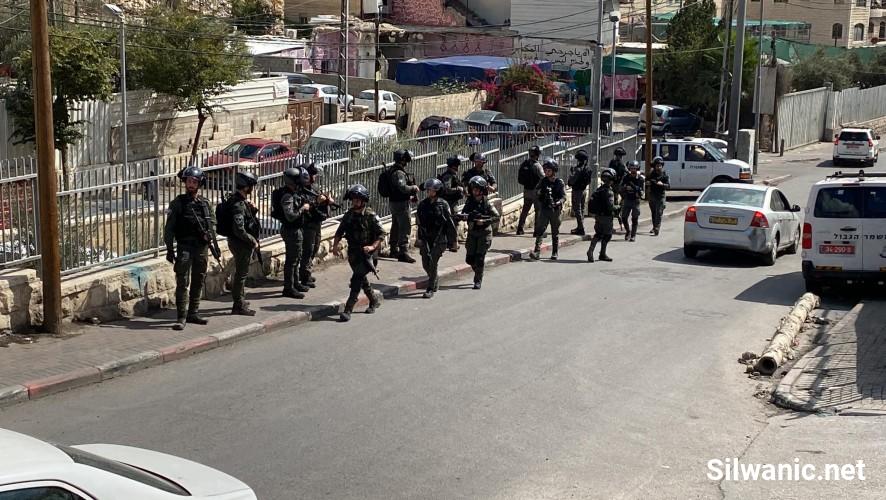
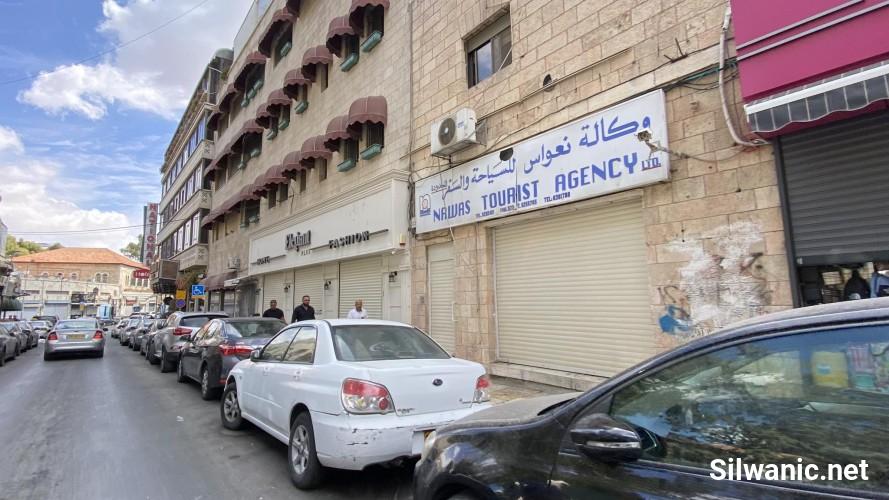
On the fifth day of “Al-Aqsa Flood” Operation, the siege on Al-Aqsa and the Old City of Jerusalem continued, and a comprehensive strike took place to mourn the lives of the martyrs of the town of Silwan. Confrontations also continued in the towns and neighborhoods of the city, as well as raids and the deployment of barriers and checkpoints.
Silwan
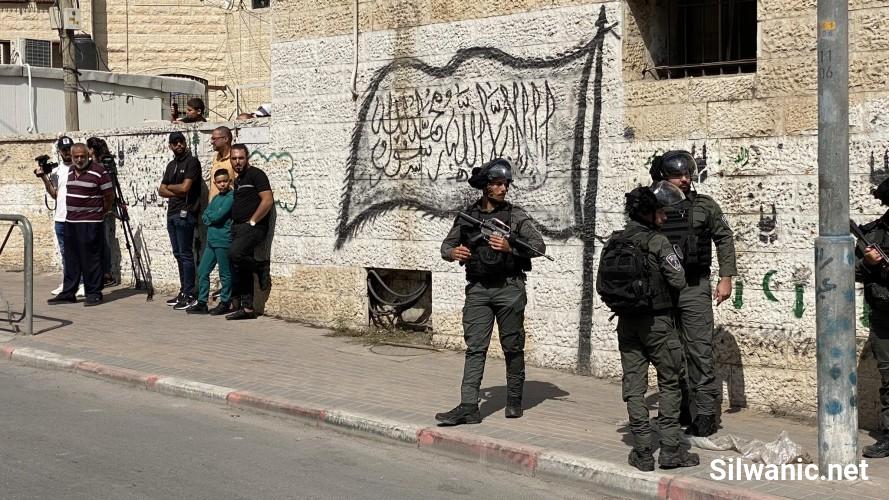
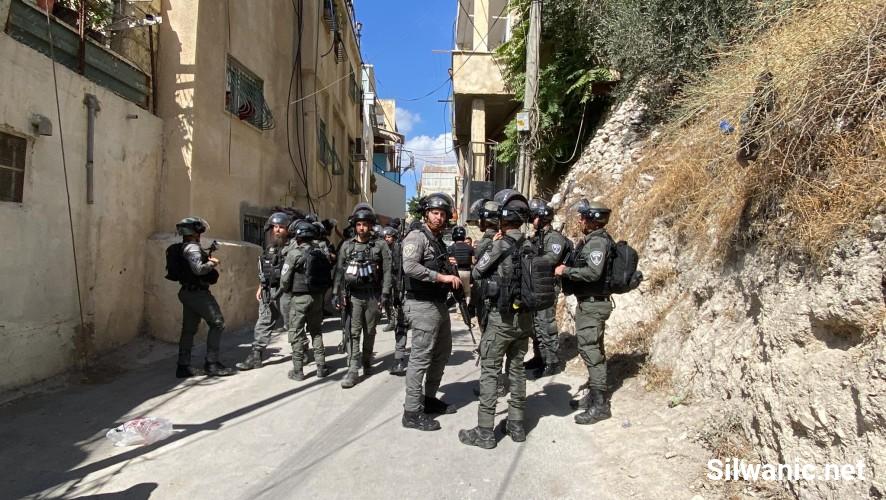
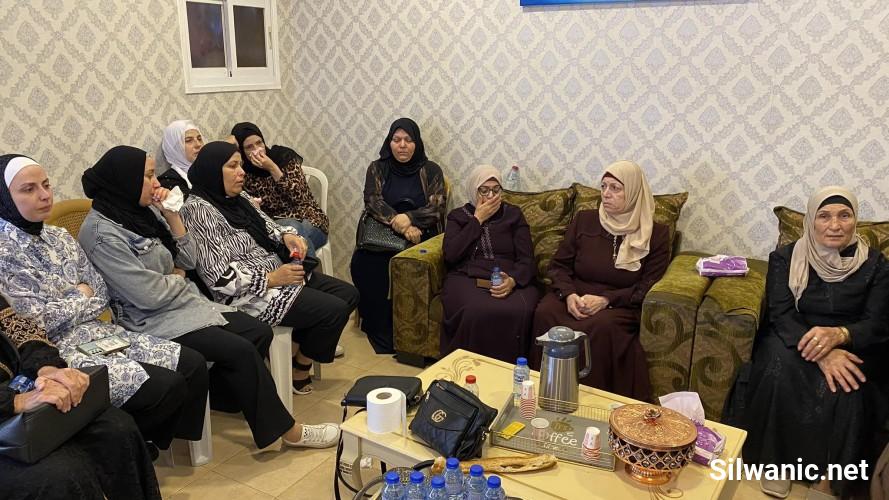
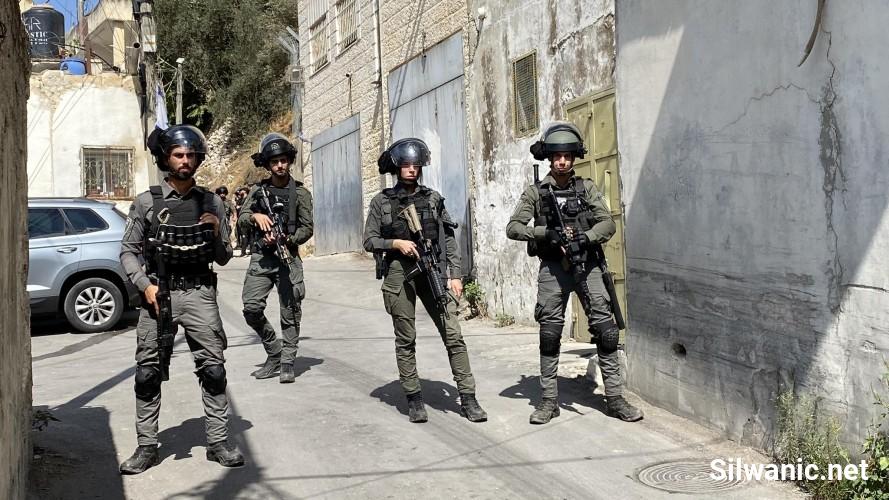
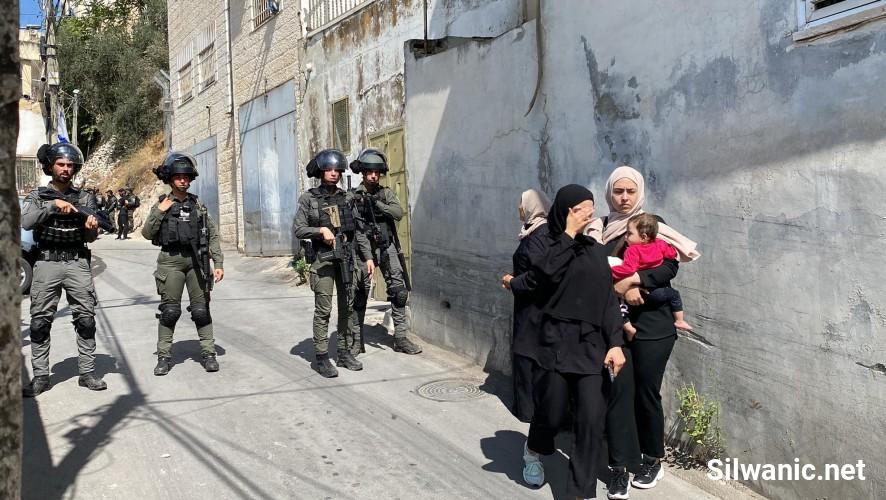
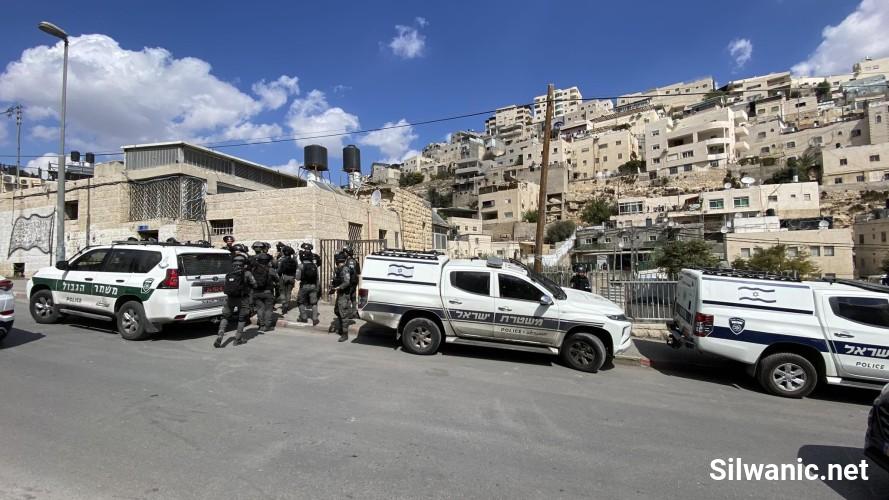
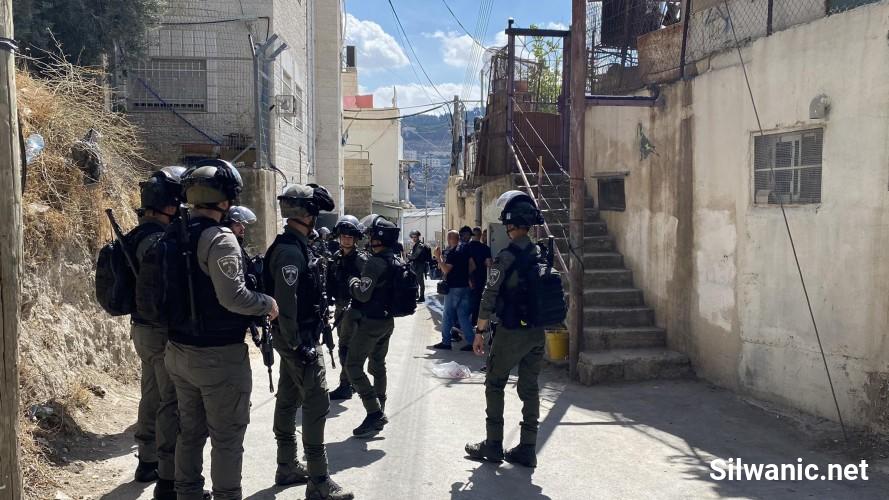
The town of Silwan, especially the Ein al-Lozeh, Bi’er Ayoub, and Maragha neighborhoods, witnessed repeated raids throughout Wednesday, especially around the homes of the martyrs Ali al-Abbasi and Abdel Rahman Faraj, to prevent and suppress the establishment of a “condolence tent.”
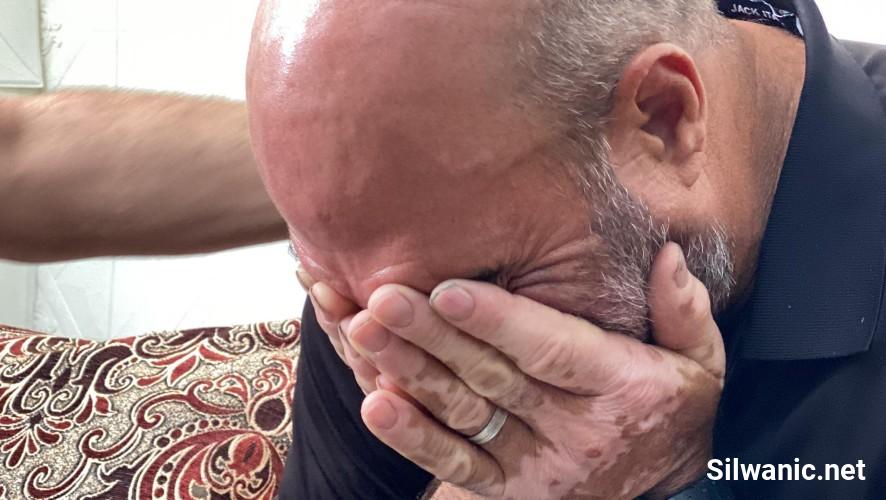
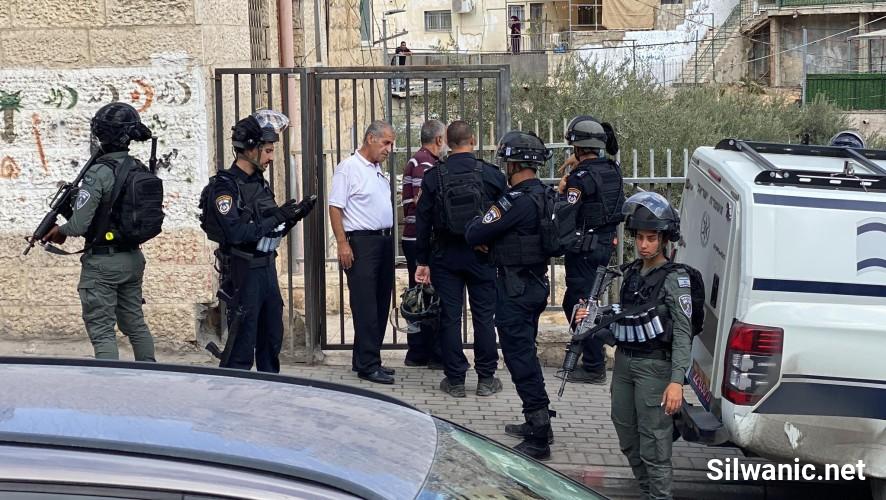
The Al-Abbasi and Faraj families explained that the forces stormed their houses and informed them that it was forbidden to set up a “condolence tent” and threatened to crack down on the place if any tent continued to exist. The Al-Abbasi family placed “covers” in the yard of their house, while the Faraj family placed the “covers” on the roof of the house.
At the Al-Abbasi family, the forces stormed the family’s house and its surroundings several times, under the pretext of gathering in front of the house, “assaulting those present with bombs and beatings.” They also stormed its surroundings and prevented anyone from being present or standing at the door of the house, and in the evening hours they stormed the house and prevented anyone from being in it, except for the elderly from the family members.
An eyewitness tells the details of the martyrdom
The Wadi Hilweh Information Center - Jerusalem quoted an eyewitness who narrated what happened with the martyrs Ali and Abdul Rahman, from the first moment of Abdul Rahman’s injury until the announcement of their martyrdom.
He said: “In the beginning, Abdul Rahman was injured on the main street in the neighborhood. Ali immediately carried him and fled towards the “yard/entrance of the neighborhood,” a “narrow corridor and stairs” separated from the main street by an iron door, and suddenly a large force stormed the place and fired bullets towards the two young men, even though Abdul Rahman was injured and Ali quickly took him to the courtyard.”
The witness added: “Abdul Rahman had an injury to his head and was bleeding. He was placed on a large step and left bleeding. The forces beat him on the head successively, insulting him and saying, ‘Die, die.’”
As for the young man, Ali, he was hit by a bullet in the waist and another in his lower limbs. While he was bleeding, the forces searched him and stripped him of his clothes. They interrogated him on the ground about his name, so he told the officer, then he said to him: Why are you doing this? He answered, “For the sake of al-Aqsa.”
The witness added that approximately 50-60 members of the intelligence, police, officers, and special forces stormed the yard, surrounded it completely, and prevented anyone from walking, moving, or even standing at the window of his house.
He continued: "For an hour and a half, the forces left the two young men bleeding, even though the Red Crescent and Magen David ambulances arrived at the site, but none of the crews were allowed to reach the injured."
As for the transfer process, he explained: “Ali was pulled from the courtyard to the ambulance, and Abdul Rahman was pulled by two soldiers down 11 steps, and his head bumping the stairs.”
Al-Aqsa and the Old City
The forces continued to impose restrictions on the entry of Palestinians to Al-Aqsa Mosque and the Old City, and prevented those under the age of 50-60 from entering Al-Aqsa, and worshipers performed prayers on the doorsteps of the mosque, after they were prevented from entering.
Settlers' incursions into Al-Aqsa Mosque also continued through the Dung Gate.
At the gates of the Old City, forces were deployed and searched young men after making them stand against the walls, or detaining them inside the observation rooms in the Damascus Gate area, and assaulted some by beating and pushing.
Confrontations
The towns of Issawiya, Silwan, Al-Tur, Jabal Al-Mukabber, Wadi Al-Joz neighborhood, and Shu’fat refugee camp witnessed violent confrontations with the forces.
Arrests
The forces continued arrests in the city of Jerusalem, and the Wadi Hilweh Information Center monitored the following arrests:
1. Ahmed Mustafa
2. Mohammad Mustafa
3. Abu Majdi Al-Karaki
4. Youssef Al-Karaki
5. Ragheb Abu Sneineh
6. Mo’men Bshara
7. Nader Natsheh
8. Mohammad Mahmoud