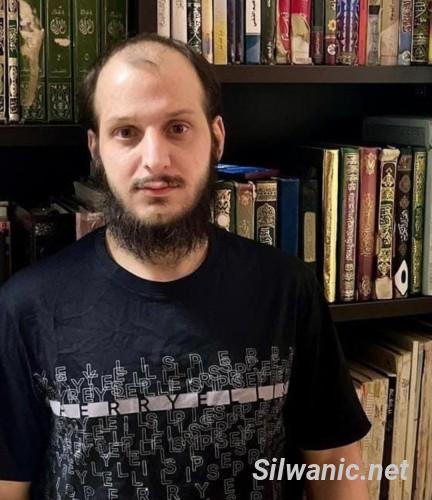
Behind the walls, away from the cameras... the testimony of Jerusalemite prisoner Mohammad Attoun reveals the policy of torture and ill-treatment in Israeli prisons
The testimony of released prisoner Mohammad Mahmoud Attoun serves as a vivid and daily example of the systematic torture and ill-treatment practiced by the occupation authorities against Palestinian prisoners. It is a precise documentation of the harsh conditions of detention endured by Palestinian prisoners, far from the cameras and the clamor of the news.
Attoun's testimony to the Wadi Hilweh Information Center in Jerusalem is a living testament to the daily oppression experienced by prisoners in Israeli prisons, including deliberate torture and humiliation, beatings, medical neglect, and overcrowding in cells—a recurring scene that reflects the depth of the violations within Israeli prisons.
Testimony of released prisoner Mohammad Attoun
Released prisoner Attoun said: “I was arrested at the beginning of 2023 along with my brothers, Qassam and Dujana, on the charges brought against us. After nearly a year and a month of detention, I was released on the condition of house arrest until the legal proceedings against me were completed. I was also placed under house arrest with an electronic bracelet that restricted my movement within the house.”
“During my house arrest, the hearings and legal proceedings continued until I was sentenced to two years of actual imprisonment. At the beginning of May, I turned myself in to the Ramla prison administration, beginning a new ordeal of suffering, oppression, and abuse,” Attoun added.
He continued: “When I arrived at the prison, they asked me to change out of the clothes I came in with and into the prison clothes known as the ‘shabas’ (brown in color). While I was in the waiting room, five of the guards stormed the room to transfer me to the cages that precede the ‘post’. We walked for about one kilometer and I was handcuffed, so I was dragged violently until I fell to the ground, and they continued to beat and kick me with their heavy boots, while their hands rained down on me with harsh slaps. I had told them beforehand that I suffer from bone problems and disc problems in the neck and back, and I presented them with the medical reports, but they did not care, and the officer was even asking them to continue beating me.”
In the evening, we were transferred to the prison van and from there to the Beer Sheva Prison crossing. After being searched there, they took me to a place without surveillance cameras, and there they began beating me again on my chest, face, and feet, breaking three of my teeth and cutting my lip. Despite the bleeding and pain, I received no medical treatment.”
The released prisoner, Mohammad Attoun, continued: “The next day, I was transferred to Nafha Prison. My hands were cuffed behind my back, and we were forced to kneel at all stages of detention and transfer. While I was in Nafha, in this position, an officer struck me on the side of my head with a baton, and I lost consciousness before being taken to my cell to serve my sentence.”
Conditions inside prisons
Released prisoner Mohammed Attoun confirmed that conditions in Israeli prisons are extremely dire.
Attoun described the details of the prison conditions, saying: "The cells are overcrowded—a cell meant for six or eight prisoners is now crammed with sixteen. Inside the cells, we are forced to adhere to specific distances that cannot be exceeded, and we are not allowed to spread blankets on them. The number of beds is insufficient, forcing prisoners to sleep close together or on the floor. Prisoners sleep on thin mattresses, some without blankets, which leads to the spread of scabies.
As for the food, it is very little and does not satisfy hunger. The bread is limited in slices, and sometimes the food is spoiled, so we are forced to eat it as there is no other option. We used to combine meals into one so we could feel full. The food is served according to a weekly schedule and is often undercooked. The 'recreation period' (time in the yard) is not daily, and after the last prisoner exchange, it was significantly reduced."
“Hygiene supplies are almost nonexistent: shampoo, toothpaste, and toothbrushes are insufficient in small quantities, and there are no nail clippers or razors”, he added.
“Even group prayers must be conducted in a low voice, as raising one's voice will result in an immediate raid on the rooms and wards.”
The day of the great repression – August 13
On August 13th, we witnessed a day of severe repression in the presence of Minister Itamar Ben-Gvir.
Released prisoner Attoun said: “The occupation forces stormed three rooms and took all the prisoners out to the courtyard—at first we thought it was a routine exercise, but we were surprised to find our hands tied behind our backs and forced to sleep on the ground. There were about forty of us.
The riot control units stormed the place and fired tear gas, stun grenades, and pepper spray, then fired rubber bullets at our lower limbs, injuring four prisoners. Even the dog unit participated in the attack.
We remained in this situation from 11:00 AM until 6:00 PM. Ben Gvir himself came for 15 minutes, during which he hurled insults and profanities at us.”
Attoun said, "I'm not exaggerating when I say the floor was soaked with our sweat from the intense heat and the psychological and physical pressure."
He added, "We returned to our cells exhausted, but after only an hour, we were taken out again, handcuffed once more, and forced to sleep on the floor amidst continued beatings and insults until midnight."
During the same month, Ben-Gvir stormed two other sections of the prison, and the same thing happened to the prisoners there.
This arrest was not the first in the life of the young Jerusalemite, Mohammad Attoun; he was first arrested at the age of fifteen and spent five non-consecutive years in Israeli prisons.
The testimony of the released prisoner, Mohammad Attoun, reflects a systematic policy of repression practiced by the occupation authorities against all Palestinian prisoners.