A decision was made to evacuate parts of three homes belonging to the Maragha family in Silwan and to take control of the entrances and passageways for the benefit of settlers
The Maragha family in Silwan's Maragha neighborhood faces eviction from parts of three of their homes by a settler organization. The eviction process is now underway after the Supreme Court declined to hear the family's final appeal, leaving them with no legal options. The Enforcement and Execution Office has set a 10-day deadline for the family to vacate.
The family states that the eviction, as ordered, will remove sections of their homes, including passageways and entrances, creating a new situation in their residential building. This change will impact their access to their homes as well as their ability to use shared facilities and passageways.
The Enforcement and Execution Office has set an August 16 deadline for the family to vacate specific areas of their homes. On Thursday, teams began marking these areas inside the homes to delineate which parts would be seized and which would be retained. Additionally, the family has asked for a stone wall to be built to separate the seized sections from the ones they will keep.
The family states that the case, originating in 2017, concerns a land ownership dispute involving a settler organization. They argue that the land was managed by the Custodian of Absentee Property, who eventually sold it to a settler group.
Eviction of parts of three homes
The decision affects three homes belonging to the Maragha family.
The first home, belonging to Na'im Maragha, is approximately 40 square meters and has stood since 1966. It is home to four people.
The second home, belonging to Salah Maragha, is 68 square meters and also houses four people. The eviction order affects approximately 40 square meters of this home, leaving the family with only about 28 square meters.
The family states that the remaining part of the house will lack a separate entrance, bathroom, and living room, consisting essentially of only one room and a kitchen.
The third residence is occupied by In’am Maragha and her sister Rabi’a, both elderly, with one having a complete disability. The decision affects about 6 square meters, but the family emphasizes that the impact is not limited to this small area, as the section to be cut off is situated in a crucial location that would divide the house and separate its parts.
“They divided the house in half.”
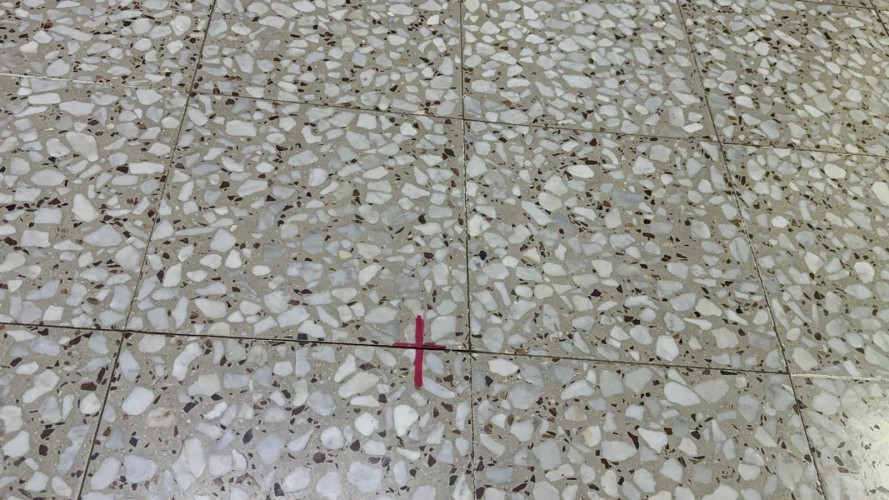
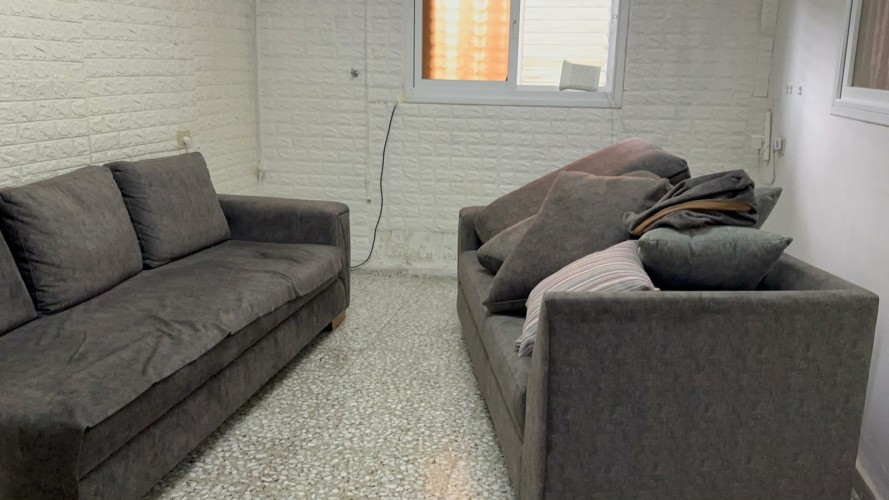
Daoud Maragha reports that enforcement officers came to the site on Thursday and marked the interiors of the apartments to indicate the section that needs to be vacated.
The markings roughly divided the house at the halfway point, reaching the bathroom area, and also indicated the hallways, staircase, and garage.
Maragha stated that the seizure will cover hallways and a staircase used to access the apartments, with the house entrance on the side controlled by the party issuing the eviction order.
The family states that Salah Maragha’s residence covers 68 square meters, but only 28 square meters will remain, excluding the entrance, bathroom, and living room. The remaining space will be claimed by the party asserting ownership of the land.
The family stresses that the issue extends beyond the house size. Managing the hallway, staircase, garage, and access road from the main street will impact other apartments in the building and may limit some family members' regular access to their homes.
“There’s no other way to reach the homes.”
Daoud Maragha notes that the three houses depend on the entrances and passageways outlined in the evacuation order, with no alternative routes available to reach them.
It is said that this way of implementing the order will cut off Daoud and Salah Maragha’s house from its entrance, and hinder access for his elderly aunts, including a woman who is fully disabled.
The family recounts that during the procedures, an official proposed options they found harsh and unrealistic, such as using a lift to move people to their homes if passageways were blocked. One family member sarcastically remarked, “Build them a cable car or bring in a crane.”
The family states, “We prefer to remain in one room rather than surrender even an inch of our home.”
The family home for decades
Daoud Maragha notes that his 65-year-old father was born in this house, along with his aunts. They highlight that the property has been a key part of the family's history and life for many decades, and that a 200-year-old water well is situated beneath the houses.
One of the houses dates to 1966. The family claims they've undergone numerous legal proceedings over the years to avoid eviction.
Maragha notes that in 2016, both the settlement association and the municipality attempted to resolve the issue, including by submitting a document confirming that construction on the land next to the Maragha family home was not obstructed. Nonetheless, the family did not accept this document.
He states that the legal actions persisted until August 2026, with appeals and petitions filed at various levels of the judiciary, from Magistrates' and District Courts to the Supreme Court. Nevertheless, the eviction order was enforced despite these efforts.
He added that the latest attempts continued from May 2025 until August 2026, before the family exhausted all available legal avenues.
Empty land… Another beginning of control
Next to the Maragha family building lies an empty plot of land. The family reports that a settler organization asserts ownership over it, and they worry that the confiscation of parts of the houses and pathways might be part of a larger effort to change the area's reality, especially since the land nearby has already been claimed and controlled.
Under the current decision, the designated sections must be evacuated between August 16 and September 24. A stone wall will be constructed to separate the seized section from the remaining family homes, and a road and pathway will be established leading to the houses, in accordance with the decision.
Danger to the house's foundations
The family believes the danger extends beyond just losing living space or entrances. They argue that any construction or changes in the area designated for seizure might compromise the building's overall structural integrity.
They mention that the area planned for evacuation overlaps with key building parts, like the foundation beam and a column, leading to worries that any work done on-site might affect the rest of the family's home.
The family states that the situation essentially involves expropriating parts of three houses, taking control of entrances, corridors, stairs, and the garage, and establishing a new road through the area they have traditionally used to reach their homes.
The family states, "We have explored all legal options and will not give up even a single meter of our home."
The Maragha family building is situated within a settlement plan covering extensive parts of the Middle Quarter and Maragha Quarter in Silwan, following land ownership claims by Yemeni Jewish residents dating back to 1881.