Homes are being partitioned and passageways blocked as the occupation takes control of sections of the Maragha family's property in Silwan to benefit settlers
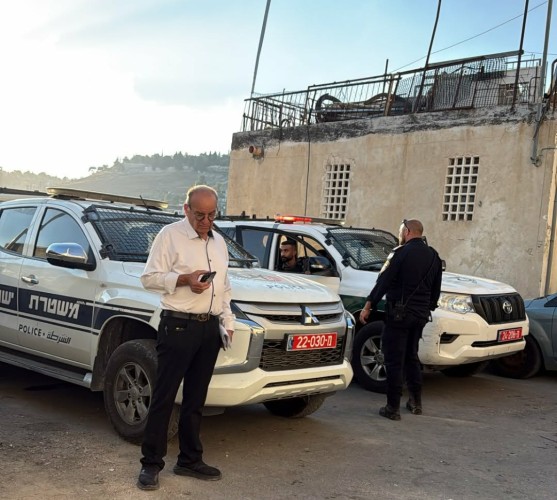
The eviction of parts of the Maragha family's homes in Silwan's Maragha neighborhood is no longer just about enforcement. Yesterday, Israeli occupation forces entered the area, encircling a residential building amid a settler incursion. They started seizing sections designated for eviction, such as parts of the houses, hallways, and entrances.
The occupation forces set up a cordon around the site, blocking the family from moving or reaching the seized areas. Meanwhile, settlers entered those sections and started taking control, effectively isolating them from the rest of the family's homes.
This follows the Enforcement and Execution Department's recent steps to determine which sections need to be vacated. They visited the homes, marked interior areas, and identified hallways, stairwells, garages, and entrances affected by the eviction notice. The family was then told to leave the specified sections and build a wall to divide these from the rest of the house.
The enforcement department initially allowed the Maragha family until the end of next September to carry out the eviction order. However, it has now shortened the deadline, setting 5 pm on August 18 as the new date for executing the order and vacating the designated areas of the houses and corridors.
The decision shifted from legal procedures and grace periods to the implementation and direct oversight of parts of the family's homes and access points, amid concerns that controlling corridors, entrances, and staircases could isolate residences from each other and block access routes.
The Maragha family pursued multiple legal proceedings and trials over the years to prevent eviction. Their efforts culminated in the Supreme Court, which declined to hear their final appeal, thereby exhausting all their available legal options.
Evicting parts of three homes
The decision impacts sections of three family residences, including parts of Salah Maragha's home, reducing its size from 68 to about 28 square meters. It also affects parts of Naeem Maragha's, In’am Maragha's, and her sister Rabia's homes.
The control extends beyond the living areas to include corridors, staircases, the garage, and entry points used by the family to access their homes. The family had previously warned that taking over these spaces would cut off their natural access routes to multiple residences.
After parts of the corridors and entrances were seized, the family had to build a new external door to reach their homes, since their previous access was blocked or taken.
The family explains that taking over these areas results in loss of space within their homes and creates a new situation inside the building by dividing sections and managing shared facilities used to access their residences.
The Maragha family home is situated in a zone marked by settlement plans and land claims in Al-Hara Al-Wusta in Silwan and Maragha neighborhood. The family states that this situation results in the gradual takeover of parts of their houses and alleyways as part of ongoing settlement expansion in the area.
Daoud Maragha stated that the family continues to stand firm in their homes and will not give up any part of their remaining property, despite parts of their land and alleyways being taken over. He stressed their dedication to their right to stay in the place they have called home for many years.