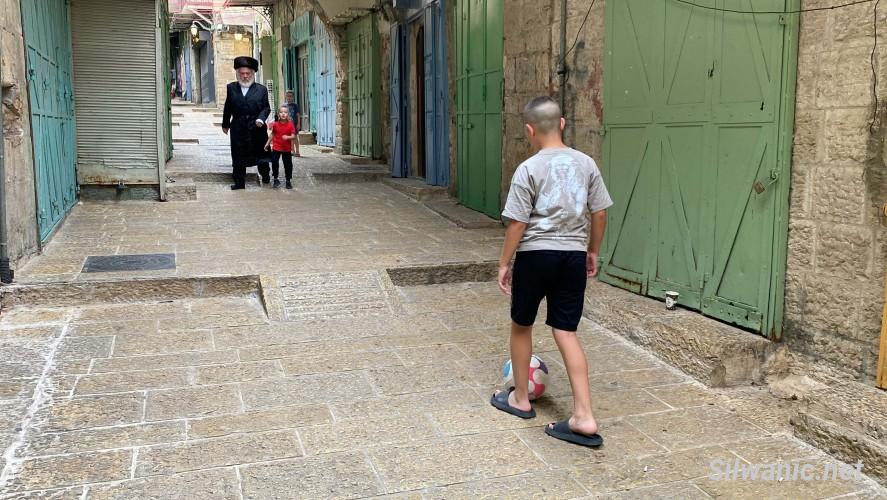
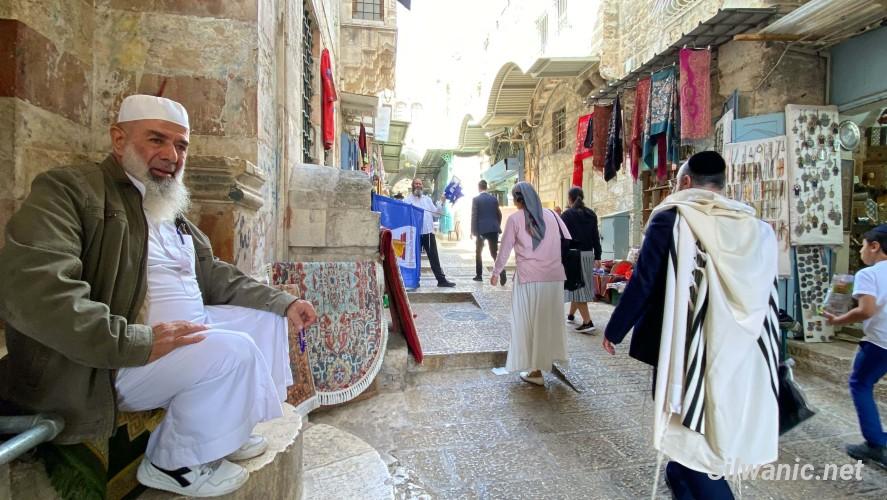
With a government green light, a settlement plan targets historic homes and properties in Bab al-Silsileh in Jerusalem
During its weekly meeting on Sunday, May 17, 2026, the Israeli government officially approved a major settlement plan involving the "confiscation and expropriation" of Palestinian properties and lands. This plan also includes the eviction of residents from homes on Bab al-Silsileh Street in the Old City of Jerusalem.
The government decision follows the details released by the Israeli army radio, aiming to establish full control over Bab al-Silsileh Street. This street is a crucial artery and serves as the direct connection between the Al-Aqsa Mosque and the Al-Buraq Wall.
Executive powers and the reactivation of 1968 practices
The government decision gave full authority to the so-called "Jewish Quarter Development Company in Jerusalem"—acting as the government’s executive agency—to promptly start procedures for seizure, eviction, and transfer of ownership in the designated area.
The occupation government approved based on an official recommendation signed in mid-July 2025 by the former Minister of Jerusalem and Heritage, Meir Brosh. This aimed to reactivate old confiscation decisions and colonial orders from 1968, which had seized 116 dunams under the pretext of “public interest.”
Historic properties and Islamic Endowments under threat
The approved items from the session show that, in its initial phase, the plan focuses on 15 to 20 historic Palestinian properties along the Bab al-Silsileh street. However, estimates, along with press and field sources, suggest that the total number of targeted buildings and structures could eventually rise to around 50.
The confiscation order covers inhabited residential homes and active shops owned by prominent Jerusalemite families, as well as important Islamic landmarks and endowments from the Ayyubid, Mamluk—such as the Tashtamariyya Madrasa—and Ottoman periods.
Geographical expansion and alteration of the Old City's identity
The Israeli government justified its decision under the guise of meeting "security and operational needs" around the Al-Aqsa Mosque and expanding the geographical scope of the "Jewish Quarter."
Army Radio quoted the "Ministry of Heritage" describing the plan as a "historic decision" that allows for the imposition of full sovereignty over the area. Through these new confiscations, the occupation seeks to increase the area of the so-called Jewish Quarter to over 133 dunams, whereas the original area of Jewish presence in that region did not exceed 5 dunams before 1948.