Self-demolition continues in Jerusalem... Jerusalemites demolish their homes under pressure from municipal decisions
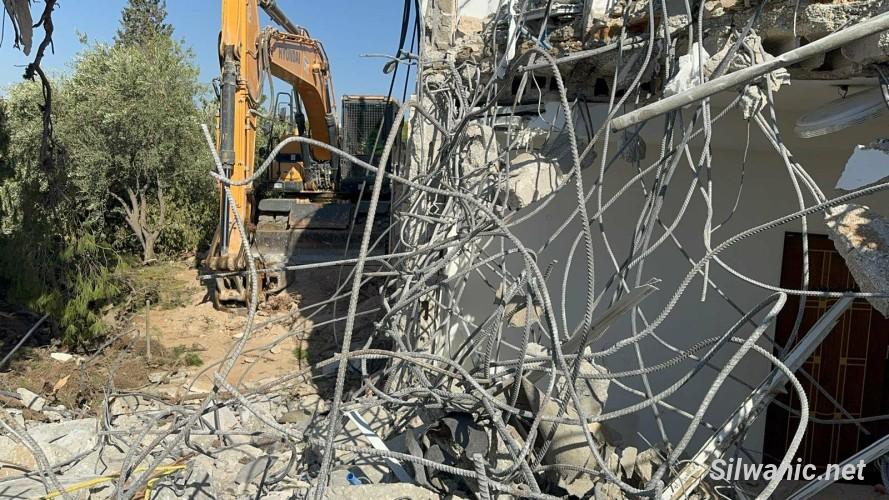
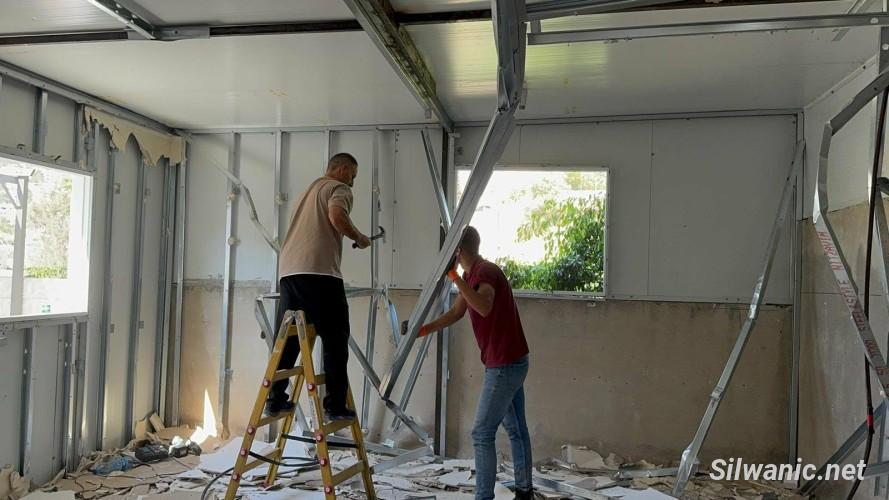
Self-demolitions persist in Jerusalem, prompted by demolition orders from the Israeli municipality citing unpermitted construction. These orders are often accompanied by warnings to homeowners that the municipality will demolish their houses if they do not demolish them voluntarily.
Recently, the Abu Sarhan and Shweiki families had to demolish parts of their homes in Jabal al-Mukabber and Silwan after years of attempting to legalize their properties and secure permits. Some remaining sections of these homes also remain under threat of demolition.
Two apartments owned by the Abu Sarhan family are at risk of total demolition
In Jabal al-Mukabber, the Abu Sarhan family was compelled to demolish two apartments themselves in a two-story building, even as the entire structure remains at risk of demolition.
The first apartment, about 70 square meters, belongs to Jerusalemite Raafat Jamil Abu Sarhan, who resides there with his wife and four children. The second apartment, around 90 square meters, is owned by Uday Muhammad Jamil Abu Sarhan, who lives there with his wife and two children. Both apartments date from 1994.
Family members explained that the building initially had two rooms during the Jordanian rule period and was later expanded. They also mentioned that they had spent years trying to legalize the land and secure a building permit, but all their efforts were rejected.
The family reported that Israeli authorities repeatedly attempted to buy the land with financial offers, but they declined to sell, noting that the land is encircled by settlements and that settlers, according to the family, are granted building permits in the region.
Shweiki self-demolishes 40 meters of his house in Wadi Yasoul
Muhammad Majid Shweiki, a resident of Silwan's Wadi Yasoul neighborhood in Jerusalem, was compelled to demolish a 40-square-meter part of his home after the Israeli municipality ordered it, asserting that the construction lacked the necessary permit.
Shweiki states that his house was constructed in 2013. The municipality has levied building fines amounting to roughly 150,000 shekels, which he is required to settle by 2028, even though part of the house has been demolished. He described how officials arrived at his home at the end of the week and notified him of the demolition order, insisting it be carried out by Thursday, despite him holding a decision to halt the demolition.
He mentioned that he visited the municipal court to submit the required paperwork. About an hour later, municipal crews accompanied by security forces raided his house. They told him he had to demolish the structure himself, or the municipality's bulldozers would do so the next day.
Shweiki stated he had initially rejected the idea of self-demolition but was compelled to do it himself, fearing that bulldozers might damage neighboring houses and properties below his.
He stated that 40 square meters of the house were demolished, with another section still at risk. The court is set to review his case next March.
Shweiki depicts the scene as part of the reality that Jerusalem residents confront, burdened by demolition orders and fines.
These cases are part of Jerusalem's ongoing demolition policy, which impacts more than just building removal. Often, homeowners must cover the costs of demolishing their own homes to avoid extra expenses, fines, or damage to nearby houses and structures.